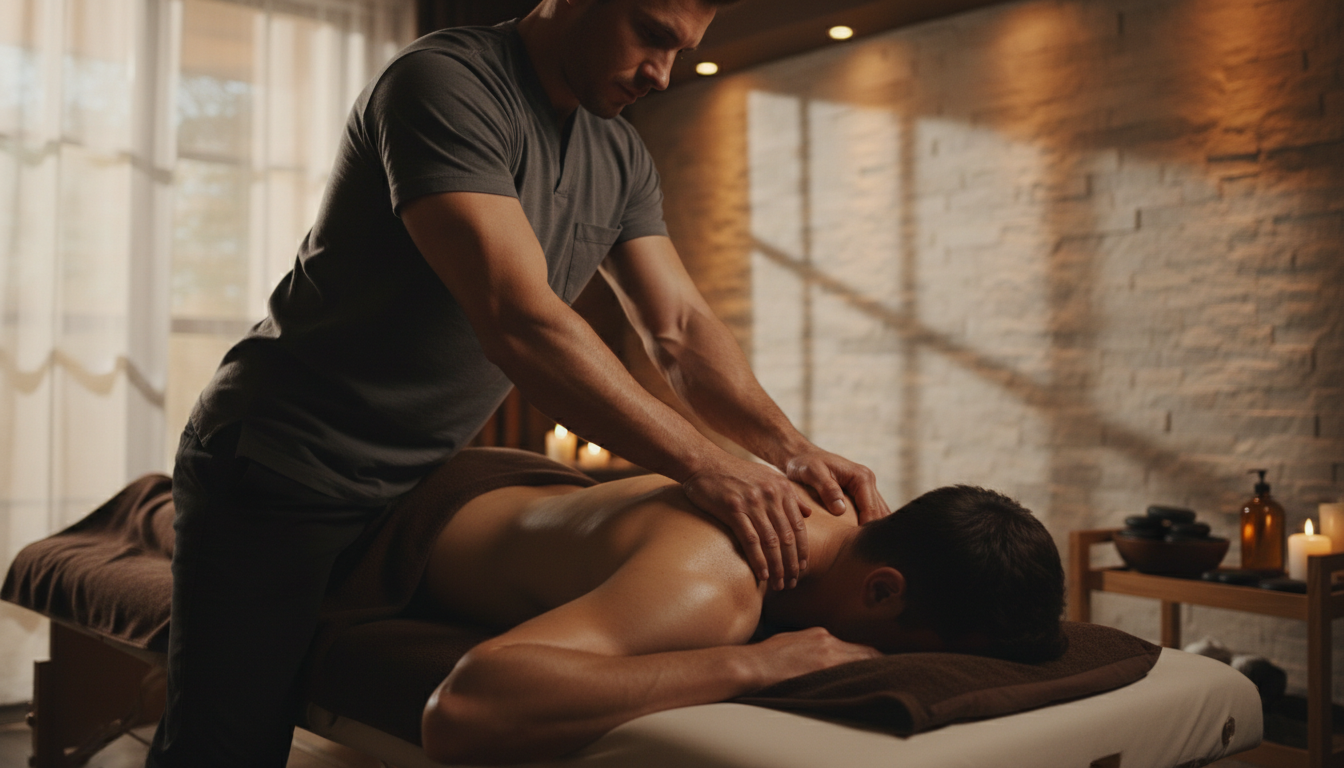
You've decided to book a massage. Good call. But then you hit the booking page and see the options: deep tissue, Swedish, sports, relaxation... and suddenly you're second-guessing everything. Don't overthink it. This guide cuts through the noise and tells you exactly which one you need based on what's actually going on with your body.
The Short Answer
- •Swedish massage = relaxation, stress relief, general wellness. Great for first-timers and anyone who just needs to decompress.
- •Deep tissue massage = targeted muscle work, chronic tension, injury recovery. Better for specific pain, knots, or athletic recovery.
That's the 10-second version. Now let's go deeper (pun intended) so you can make the right call for your situation.
What Is Swedish Massage?
Swedish massage is the classic. It's what most people picture when they think of a massage — long, flowing strokes, gentle kneading, and rhythmic tapping across the full body. The pressure is light to moderate, and the goal is whole-body relaxation.
What Swedish massage does:
- •Activates the parasympathetic nervous system (your body's 'rest and digest' mode)
- •Reduces cortisol — the stress hormone — by up to 31%
- •Improves circulation and lymphatic flow
- •Relieves surface-level muscle tension
- •Promotes better sleep and mental clarity
- •Leaves you feeling floaty and calm for hours afterward
Who Swedish massage is for:
- •First-timers who've never had a professional massage
- •Anyone dealing with stress, anxiety, or burnout
- •People who want general wellness maintenance
- •Those recovering from illness or fatigue
- •Anyone who just wants to feel good without a specific goal
“Swedish massage doesn't fix problems — it prevents them. Regular sessions keep your nervous system regulated and your muscles from building up chronic tension in the first place.”
What Is Deep Tissue Massage?
Deep tissue massage uses slower, more deliberate strokes and firm pressure to reach the deeper layers of muscle and connective tissue (fascia). It's not just 'harder Swedish' — it's a fundamentally different technique targeting specific problem areas.
What deep tissue massage does:
- •Breaks down adhesions and scar tissue in muscles
- •Releases chronic muscle knots (trigger points)
- •Reduces inflammation in overworked muscles
- •Improves range of motion and flexibility
- •Addresses postural problems from desk work or repetitive strain
- •Speeds up recovery after intense exercise or injury
Who deep tissue massage is for:
- •Athletes or anyone who trains regularly
- •People with chronic back, neck, or shoulder pain
- •Anyone with a specific injury or area of tension
- •Office workers with postural issues (forward head, rounded shoulders)
- •People who've had previous injuries with scar tissue buildup
- •Anyone who's tried Swedish and found it too light
The Key Differences Side by Side
- •Pressure: Swedish is light to medium. Deep tissue is medium to firm (sometimes intense).
- •Technique: Swedish uses long gliding strokes. Deep tissue uses slow, focused pressure and friction.
- •Goal: Swedish = relaxation. Deep tissue = therapeutic treatment.
- •Soreness after: Swedish leaves you relaxed. Deep tissue can leave you slightly sore for 24-48 hours (like a good workout).
- •Session focus: Swedish covers the whole body evenly. Deep tissue often focuses on specific problem areas.
- •Best for first-timers: Swedish wins — it's gentler and easier to receive.
Does Deep Tissue Hurt?
This is the question everyone asks. Honest answer: it can be uncomfortable in the moment, especially when the therapist works on a tight knot or adhesion. But there's a difference between 'good pain' (the productive discomfort of releasing tension) and 'bad pain' (sharp, stabbing, or wrong-feeling).
A good therapist will check in with you throughout the session. Always communicate — if something hurts in a bad way, say so. The goal is therapeutic discomfort, not suffering. You should never leave a session feeling injured.
After a deep tissue session, mild soreness for 24-48 hours is normal. Drink water, take a warm bath if needed, and let your body recover. Most people feel significantly better by day two.
Can You Combine Both?
Yes — and many skilled therapists do this naturally. A session might start with Swedish strokes to warm up the muscles and get you relaxed, then transition into deeper work on specific problem areas, then finish with lighter strokes to calm the nervous system back down. This is often called an 'integrative' or 'customized' massage.
When you're booking, don't be afraid to tell the therapist exactly what you need: 'I want to relax but I also have a tight left shoulder — can we spend some time there?' A good therapist will adapt.
What About Sports Massage?
Sports massage is essentially deep tissue with a focus on athletic performance and recovery. It often incorporates stretching, compression, and techniques specific to the demands of sport. If you train regularly, sports massage is worth exploring — but if you're not sure, start with deep tissue and see how your body responds.
The Verdict: Which One Should You Book?
- •Book Swedish if: You're stressed, you haven't had a massage in a while, you're a first-timer, or you just want to feel good.
- •Book deep tissue if: You have a specific area of pain or tension, you train hard, you sit at a desk all day, or Swedish has felt too light in the past.
- •Book sports massage if: You're an athlete, you're preparing for or recovering from an event, or you want performance-focused bodywork.
- •Not sure? Just tell the therapist your situation and let them guide you. That's what they're there for.
Browse verified male massage practitioners across Canada — Swedish, deep tissue, sports, and more. Direct contact, no booking fees.
Find a Provider Near YouLet's Talk! 💬
Which do you prefer — Swedish or deep tissue? Have you tried both? Drop a comment below and share your experience. If you're a practitioner who specializes in either modality and you're not listed yet, it's free to get started on ManMassage.ca.